Why remote working, relocation and project hiring are transforming recruitment strategies?
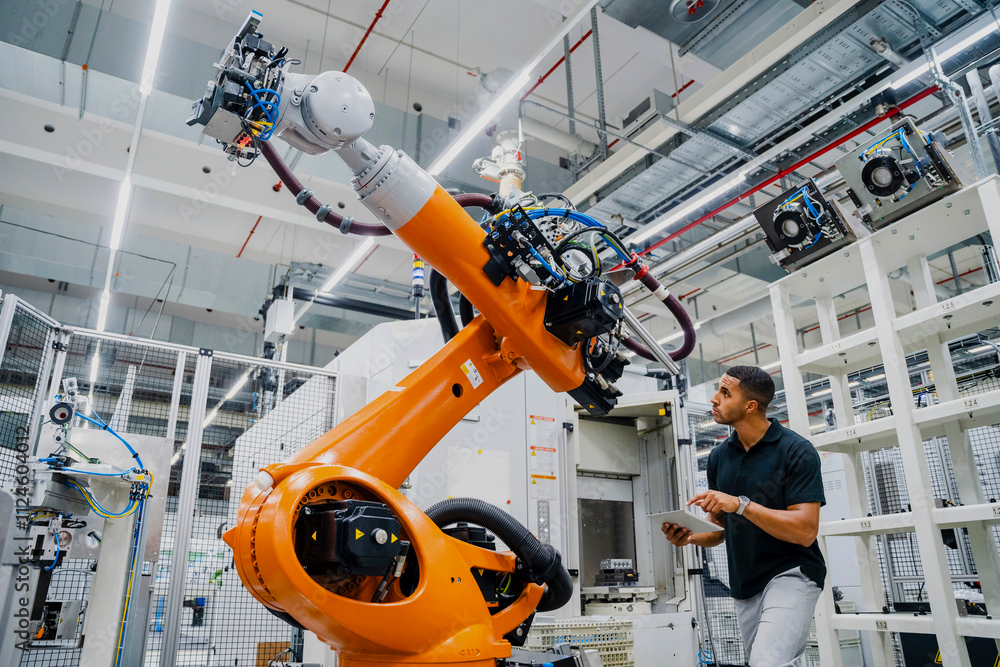
Companies across automation, logistics, manufacturing and robotics are facing a rapidly evolving tech landscape, and that's forcing companies to rethink how they acquire talent. These industries and the nature of engineering itself is changing, the skills and experience needed are evolving faster than universities and apprenticeships can keep up with. Businesses therefore cannot rely on education systems alone to solve future skills shortages. This is directly fueling the growing importance of global hiring strategies, training and upskilling, hiring from adjacent industries - because the challenge isn’t necessarily a talent shortage per se. There is a shortage of engineering talent in the right place, with the right experience, available at the right time.
This is why talent searches are increasingly becoming global by default, rather than the traditional model of advertising a role locally, identifying and recruiting from a talent pool from within the industry, within commuting distance to the company’s facilities. Considering remote working allows companies to access talent more broadly; whilst global mobility facilitates project-based hiring, deploying the best people sourced from a broader talent pool.
Engineering roles are being redefined
The biggest workforce transformation isn't happening in recruitment, it's happening within the roles themselves. Twenty years ago, a maintenance engineer was primarily responsible for mechanical and electrical systems. Today that same engineer may also be expected to understand:
● PLC programming
● Industrial networking
● Robotics
● Machine vision
● Software platforms
● Data analytics
● AI-enabled diagnostics
In many organisations, maintenance is becoming
technology. Controls engineering increasingly overlaps with software
engineering. Traditional engineering disciplines are converging with digital
technologies in ways that would have been difficult to imagine a decade ago.
… and traditional talent pipelines can’t keep pace
Universities, apprenticeships and graduate programmes continue to produce excellent engineers - however, educational institutions move more slowly than technology. Businesses cannot afford to wait for education systems alone to solve emerging skills shortages.
Additionally, many of the world's leading engineering universities approach automation, robotics and manufacturing from different educational and industrial perspectives. Engineers trained in Germany, The Netherlands, Singapore, Poland, South Korea or the Nordic countries often bring different experiences solving similar engineering challenges. This is forcing organisations to take a broader approach, including:
1. Expanding talent search internationally
Global recruitment isn't about replacing local hiring or undercutting local talent - it is simply about recognising that the best person for a role may not live nearby.
The perception that there is a shortage of engineers is somewhat false - there are talented engineers all over the world. They are not concentrated within a single city, region or even country anymore. Organisations restricting their talent search to local markets tend to recruit from the same ecosystem of competitors, thereby limiting the potential breadth of skills available. In a constantly evolving industry, innovation and competitive advantage often go hand-in-hand with cutting edge development or implementation of new technology and software. The experienced maintenance engineer who understands robotics, automated warehousing, controls systems, PLCs, data analytics and software integration simply may not exist within a practical commuting distance.
2. Recruiting from adjacent industries and investing in upskilling, training
The organisations that invest in training are often discovering they can access significantly larger talent pools than competitors searching for the ‘perfect’ CV.
Another noticeable shift is that organisations are becoming less focused on hiring candidates with identical, predictable backgrounds. Instead of insisting on direct experience within one specific sector, businesses are increasingly recognising transferable engineering skills. An engineer from automotive automation may transition successfully into logistics. A controls engineer from food manufacturing may quickly adapt to automated warehousing. A robotics specialist from electronics manufacturing may bring valuable experience into pharmaceutical automation. Businesses are beginning to prioritise capability, learning agility and technical foundations over identical job histories.
3. Remote working
Remote working can help improve efficiency and delivery at scale, utilising talent that may be based in a different location or country. Engineering support, software development, controls programming, digital commissioning, simulation, project management and technical consulting increasingly operate across multiple locations. Where travel is already part of a role, being able to deliver at least part of the work remotely has made geographical restrictions far less relevant. Companies that embrace flexible location strategies often gain access to significantly broader and more specialised talent pools. With the right mix of talent, this flexibility can be applied across single countries and across borders alike.
4. Project-based hiring
Organisations are increasingly supplementing permanent teams with specialist project talent, enabling access to expertise precisely when it is needed without permanently increasing headcount. Specialists can be brought in for specific projects or situations such as software upgrades, automation implementations, robotics deployment, and digital transformation. Contingent workers can also be deployed globally. This global mobility plays an important role, reducing a lot of time and complexity involved with relocation.
Managing international talent increasingly requires expertise around compliance, payroll, visas, taxation, Employer of Record solutions and international workforce management.
Looking ahead
The organisations that succeed over the next decade won't necessarily be those with the biggest recruitment budgets. They'll be the ones willing to rethink where talent comes from, how capability is developed and what the engineering workforce of the future really looks like. Finding the necessary skills will require organisations to think differently. The companies that build flexible, internationally-minded talent strategies today will be better positioned to deliver tomorrow's automation projects, support increasingly complex technologies and remain competitive in a market where specialist engineering skills have never been more valuable.
At Proactive Global, we're seeing this shift every day. The businesses securing the strongest engineering talent are rarely those searching the hardest - they're the ones searching the smartest.